.png)
.png)
.png)
.png)

The Quiet Beginning No One Heard
It does not start with explosions. No burning skies. No giant asteroid tearing across the horizon. If the end of our world ever comes, scientists say it may arrive quietly, almost unnoticed, like a slow fading signal. Cities will still stand, planes will still fly, and people will still wake up for work — yet something deeper may already be shifting beneath the surface.
Across the globe, researchers studying climate, ecosystems, technology, and human systems are noticing patterns that feel less like isolated problems and more like connected warning signs. None of these signals alone means the world is ending. But together, they paint a picture that feels unsettling — a civilization under silent pressure.

A Planet Under Strain
The Earth has always changed. Ice ages came and went. Oceans shifted. Continents moved. But what alarms scientists today is the speed of change. Climate systems that once moved slowly over thousands of years are now shifting within decades.
Glaciers are retreating, sea levels are creeping upward, and extreme weather is becoming less rare. These changes do not destroy civilization overnight. Instead, they slowly test food systems, water supply, and infrastructure. History shows that civilizations rarely collapse in a single dramatic moment. More often, they weaken quietly until recovery becomes impossible.
The fear is not sudden disaster — it is slow exhaustion.

The Fragile Web of Modern Life
Human civilization today is more connected than ever before. Electricity, communication, food supply, banking, and transport form a delicate web. If one major thread breaks, others feel the shock.
Scientists studying complex systems warn that modern civilization behaves like a tightly stretched network. It works beautifully under normal conditions but becomes vulnerable when stress builds. A prolonged climate shock, major energy disruption, or widespread ecological collapse could push systems beyond recovery.
The danger lies not in a single blow, but in accumulated strain.

Nature’s Warning Signs
Across forests, oceans, and grasslands, signs of stress are becoming visible. Coral reefs, often called the rainforests of the sea, are bleaching at alarming rates. Some forests are struggling to regenerate after repeated drought and fire. Species are disappearing faster than expected.
Each of these events may seem small when viewed alone, but together they form a pattern. Healthy ecosystems support food, air, water, and climate stability. When ecosystems weaken, civilization quietly loses its foundation.
This is not collapse in a dramatic sense. It is erosion.
Technology: Strength or Hidden Risk?
Technology has lifted humanity to extraordinary heights. It powers medicine, science, communication, and discovery. Yet some experts warn that dependence on technology may also create hidden fragility.
Modern society relies heavily on electricity, satellites, digital systems, and data networks. A severe solar storm, large cyber disruption, or prolonged energy failure could temporarily silence global systems. Civilization would not vanish — but it would feel the shock deeply.
The risk is not technological failure itself, but our reliance on it.

The Psychological Factor — Why Collapse Feels Invisible
One of the strangest aspects of slow decline is that people rarely notice it in real time. Humans adapt quickly. Small changes feel normal when they happen gradually. This makes slow collapse difficult to recognize until it becomes severe.
Scientists studying societal resilience explain that civilizations often ignore early warning signs because life continues to feel familiar. Markets open. Schools run. News cycles move on. Yet beneath daily life, systems may be shifting.
The silence is what makes it dangerous.
Are We Truly Approaching Collapse?
Despite the concern, scientists do not claim that the end of civilization is certain. Many believe humanity still has time to adapt, innovate, and stabilize. Renewable energy, environmental restoration, and global cooperation offer real hope.
The message from researchers is not panic — it is awareness. Civilization is not collapsing today, but pressures are real and growing. History shows that societies that respond early tend to survive. Those that ignore warning signs often struggle later.
The future remains unwritten.
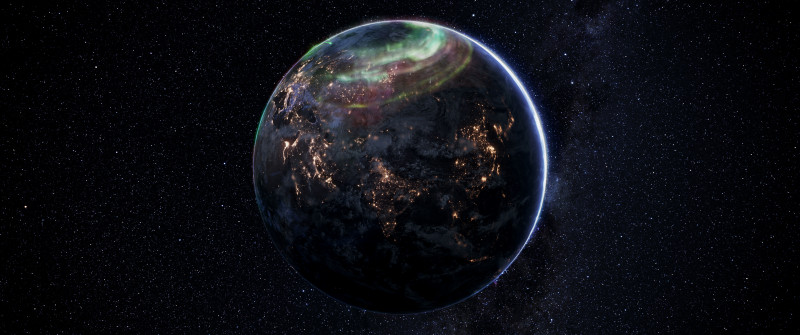
What a “Silent Collapse” Would Look Like
If such a decline ever unfolded, it would not resemble disaster movies. Instead, it might appear as slow transformation.
Cities might adapt to changing climates. Economies might shift under resource pressure. Some regions could struggle while others stabilize. Technology would continue to evolve, and life would go on, though perhaps differently than before.
Collapse, in this sense, is not sudden destruction but gradual change.
Why This Moment Matters
For the first time in history, humanity can observe global patterns in real time. Satellites watch forests grow and shrink. Scientists track climate, oceans, and ecosystems. Knowledge gives us a rare advantage — the ability to see warning signs early.
Whether civilization thrives or struggles depends largely on response, not fate.
FAQ
Is the world ending soon?
No. There is no scientific prediction that the world will end soon. Researchers warn about long-term risks, not immediate collapse.
What is meant by “silent collapse”?
It refers to gradual systemic decline rather than sudden disaster — slow environmental, technological, or societal stress.
Are scientists certain civilization will collapse?
No. Many believe humanity can adapt and avoid major collapse through innovation and cooperation.
Is climate change the only threat?
No. Scientists study multiple factors including ecosystem stress, technological risk, and global system fragility.
Should people be worried right now?
Concern is reasonable, panic is not. Awareness and preparedness matter more than fear.

The Human Perspective
Every generation has faced uncertainty about the future. Yet humanity has repeatedly adapted, rebuilt, and moved forward. The idea of a silent collapse is not a prophecy — it is a reminder that civilizations are living systems, shaped by choices.
The end, if it ever comes, may not arrive with fire or thunder. It may come quietly, hidden within everyday life. But silence does not mean inevitability. Awareness changes outcomes.
For now, the lights are still on. The world still turns. And the future is still in human hands.
References & Sources
Intergovernmental Panel on Climate Change (IPCC) — Global Climate Assessment Reports
https://www.ipcc.ch
NASA Earth Observatory — Climate and Planetary System Monitoring
https://earthobservatory.nasa.gov
United Nations Environment Programme — Global Environmental Outlook
https://www.unep.org
World Bank — Climate and Development Reports
https://www.worldbank.org
National Academy of Sciences — Climate and Societal Risk Studies
https://www.nationalacademies.org