


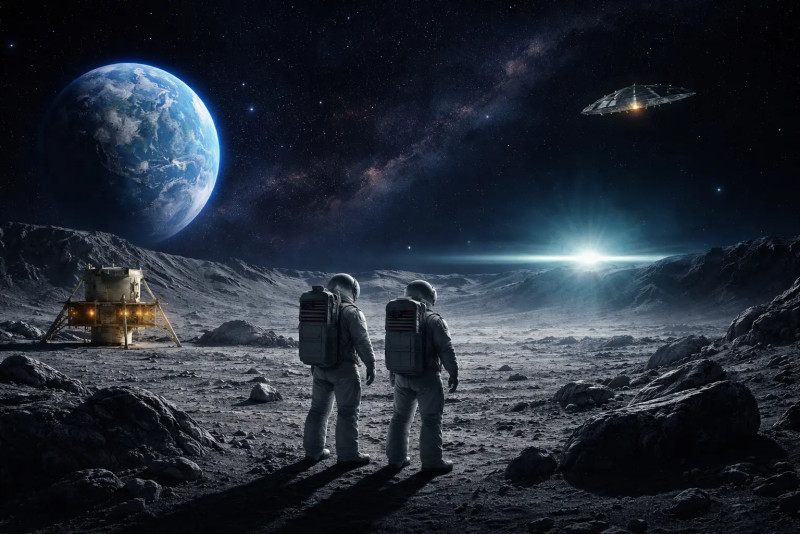
The Silent Zone: Why Moon Astronauts Felt They Weren't Alone
Have you ever walked into a dark room and felt a sudden chill, a nagging sense that someone—or something—was standing right behind you? Now, imagine that feeling, but you’re 238,000 miles away from home, standing on a desolate, grey rock where nothing is supposed to be alive.

For decades, we’ve been told the Moon is a "magnificent desolation," as Buzz Aldrin famously put it. A dead, silent world. But if you dig into the transcripts of the Apollo missions and listen to the whispered stories of the men who actually walked there, a different picture starts to emerge. There’s a specific phenomenon often called the "Silent Zone"—not just a place where radios cut out, but a headspace where the logic of science meets the raw instinct of being watched.
Why do some of the world’s most elite, cold-blooded test pilots come back from the Moon talking about "eerie music," "unexplained lights," and a crushing sense of a "presence"? Let’s look at the mysteries that NASA doesn’t usually put in the front of their brochures.

The Far Side "Music": Apollo 10’s Creepy Concert
In 1969, months before Neil Armstrong took his giant leap, the crew of Apollo 10 (Thomas Stafford, John Young, and Eugene Cernan) flew around the "Far Side" of the Moon. This is the "Silent Zone"—the point where the bulk of the Moon blocks all radio signals from Earth. For about an hour, they were the most isolated humans in history.
Suddenly, their headsets filled with a sound they couldn’t explain. It wasn’t static. Cernan described it as "outer-space-type music"—a weird, whistling, rhythmic humming.
The transcripts are wild. They didn't just hear it once; it lasted for nearly an hour. They actually debated whether or not to tell NASA. "No one will believe us," Cernan famously said. While the official explanation is "radio interference" between the two spacecraft modules, many still wonder why the sound felt so... intentional.

Edgar Mitchell’s "Universal Connectedness"
Not every astronaut saw a "flying saucer," but many felt something far deeper. Edgar Mitchell, the sixth man on the Moon during Apollo 14, underwent a profound transformation. While he was out there, he didn't just see rocks; he felt an overwhelming "presence" of intelligence in the universe.
He became so convinced that we weren't alone that he spent the rest of his life researching the paranormal and extraterrestrial life. Mitchell openly stated that he believed alien visitations were being covered up. He felt the Moon wasn't just a rock, but a vantage point—and someone else might be using it.

The "L-Shaped" Mystery of Apollo 11
Even the legends weren't immune. During the journey to the Moon, the Apollo 11 crew noticed something traveling alongside them. They radioed Houston to ask where the S-IVB (the rocket stage they had discarded) was. Houston replied it was 6,000 miles away.
So, what was the object they were looking at? Buzz Aldrin later described it as an "L-shaped" object. In later years, he clarified that it was likely a sunlight reflection on a metallic panel, but the moment it happened, the tension in the cockpit was real. They were being followed by something they couldn't identify.
Why the "Silent Zone" Still Haunts Us
What is it about the Moon that triggers these feelings? Scientists call it the Overview Effect—the psychological shift that happens when you see Earth from space. But for those on the Moon, there’s an added layer: The Total Absence of Life.
When you are in a place where literally nothing lives, your brain isn't used to it. Every shadow looks like a movement. Every crackle of static sounds like a voice. But for the men who have been there, it wasn't just "fear." It was a distinct feeling of being a guest in someone else’s house.
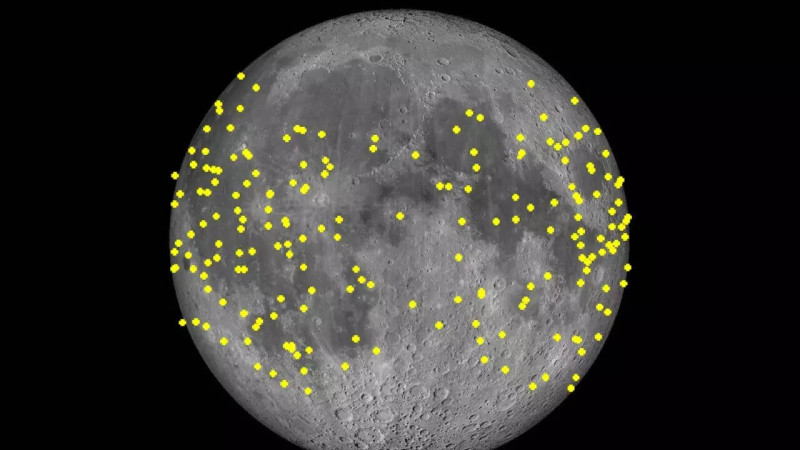
Strange Lights and Lunar Anomalies
Amateur astronomers and astronauts alike have reported "Transient Lunar Phenomena" (TLP). These are strange flashes of light, glowing clouds, and moving spots on the lunar surface.
-
Apollo 12 reported seeing "bright flashes" while orbiting.
-
Unexplained Shadows: Photos from various missions show shadows that don't seem to match the craters they are in.
Is it just gassing from the interior, or is something else active down there?
Frequently Asked Questions
Q: Did astronauts actually see aliens on the Moon?
A: No astronaut has ever officially stated they saw a "little green man" or an alien base. However, several (like Edgar Mitchell and Gordon Cooper) became firm believers in extraterrestrial life based on their experiences and things they learned through government channels.
Q: What is the "Moon Music" heard by Apollo 10?
A: It was a weird, whistling sound heard in the headsets. NASA’s official stance is that it was radio interference (VHF) between the Lunar Module and the Command Module.
Q: Is there a "Silent Zone" where radios don't work?
A: Yes. When a spacecraft goes behind the Moon (the Far Side), the physical mass of the Moon blocks all radio waves to Earth. This creates a period of total radio silence.
Q: Why do some people think the Moon is hollow?
A: During the Apollo 12 mission, the crew crashed a spent rocket stage into the Moon to test its seismic reaction. The Moon "rang like a bell" for over an hour. This led to fringe theories that the Moon might be a hollow structure, though most geologists say it’s just the way the dry lunar crust vibrates.

The Verdict: Are We Being Watched?
Whether it’s the "music" of the Far Side or the feeling of a "presence" in the lunar dust, the Moon remains our most mysterious neighbor. It sits there, locked in orbit, always showing us the same face, while the "Silent Zone" on the other side keeps its secrets.
Maybe the astronauts felt they were being watched because, in a universe this big, it’s a bit arrogant to think we’re the only ones looking.
Source References & Further Reading:
-
NASA Apollo 10 Mission Transcripts - The "Moon Music" Incident
-
Edgar Mitchell’s Journey and the Institute of Noetic Sciences
-
History of Apollo 11 Sighting Claims - NASA Solar System Exploration
Disclaimer: This article explores historical accounts, astronaut interviews, and unexplained phenomena. While the feelings and transcripts described are documented, interpretations regarding extraterrestrial life remain speculative and are not officially confirmed by NASA.