.png)
.png)



We’ve all seen the disaster movies. The world is scorching, the ice is gone, and a group of rogue scientists decides to hit the "global cooling" button by spraying stuff into the sky. It sounds like pure Hollywood fiction, right? Well, fast forward to 2026, and this "crazy" idea isn't just for the big screen anymore. It’s a real, debated, and frankly terrifying branch of science called Solar Geoengineering.
The logic is simple: If the planet is getting too hot because we’ve trapped too much heat, why not just turn down the dimmer switch on the Sun?

But as with anything involving the entire planet’s thermostat, the "What If" is followed by a very big "But." From "termination shocks" to turning the sky a weird milky white, the stakes are literally as high as they get. Let’s dive into the risky, fascinating, and somewhat desperate science of dimming the Sun.
The Big Idea: How Do You "Dim" a Star?
Scientists aren't actually suggesting we touch the Sun. Instead, they want to create a giant, invisible umbrella for the Earth. The most popular method—and the one getting the most serious research right now—is called Stratospheric Aerosol Injection (SAI).

Imagine a fleet of high-altitude planes flying way above where your holiday flight goes—right into the stratosphere. Once there, they release millions of tons of tiny, reflective particles (like sulfur dioxide or calcium carbonate). These particles act like microscopic mirrors, bouncing a small percentage of sunlight back into space before it ever hits our atmosphere.
Why are we even talking about this?
Nature actually gave us the blueprint. In 1991, Mount Pinatubo in the Philippines erupted with such force that it shot a massive cloud of ash and gas into the sky. That "natural" geoengineering event cooled the entire planet by about 0.5°C for over a year.
Proponents argue that if we can do this on purpose, we could:
-
Stop heatwaves in their tracks.
-
Save the polar ice caps from disappearing.
-
Buy humanity time to fix our carbon addiction.
The "Oops" Factor: Why It’s Terrifyingly Risky
If it sounds too good to be true, that’s because the side effects are a nightmare to predict. We aren't just talking about a rainy weekend; we’re talking about messing with the fundamental systems that keep us alive.
1. The Sky Might Turn White
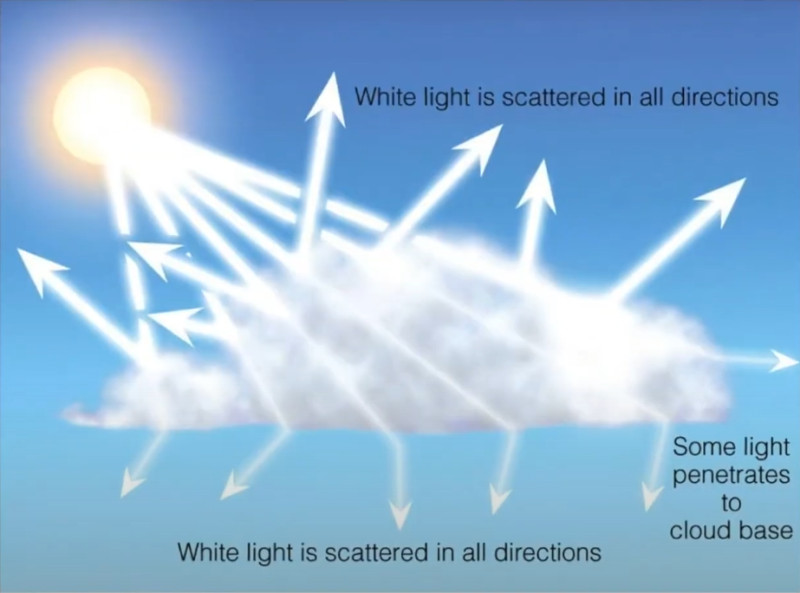
Love a deep blue sky? You might have to say goodbye to it. Adding all those particles to the stratosphere wouldn't just reflect heat; it would scatter light. The result? A permanent, hazy, milky-white sky. It sounds poetic until you realize it could change how plants grow and how we feel mentally.
2. Messing with the Rain
The Earth’s weather is a delicate dance. If you cool the atmosphere artificially, you might accidentally "turn off" the monsoons in South Asia or cause a permanent drought in Africa. Imagine "solving" global warming only to cause a global famine because the rain stopped falling where the food grows.
3. The "Termination Shock"
This is the big one. Imagine we start dimming the sun and keep doing it for 20 years while still pumping out CO2. If we suddenly stopped—due to a war, a technical failure, or a political shift—all that trapped heat would hit the planet at once. We’d see decades of warming happen in just a few years. It would be a "thermal whiplash" that no ecosystem could survive.
The 2026 Reality Check: Who is Actually Doing This?
For a long time, this was a "taboo" subject. But as 2025 and 2026 have seen record-breaking temperatures, the taboo is breaking.
-
The UK’s ARIA Program: The UK government has backed research to gather "critical data" on climate cooling. They aren't dimming the sun yet, but they are testing the equipment and the physics.
-
The Global South’s Voice: Countries like India and various African nations are increasingly involved. Why? Because they are the ones who will be hit hardest if geoengineering goes wrong—or if it's never tried at all.
Important Note: This is not a "solution" to climate change. It’s more like a high-stakes medical intervention. It treats the fever (the heat), but it does absolutely nothing for the infection (carbon emissions).

The Ethics: Who Gets the Remote Control?
Who decides the "perfect" temperature for Earth? If one region wants it warmer for farming, but another wants it cooler to save lives, who wins? There is currently no "Global Thermostat Treaty." The risk of a single country—or even a rogue billionaire—deciding to "fix" the climate on their own is a genuine geopolitical nightmare.
FAQ: Your Solar Geoengineering Questions Answered
Is solar geoengineering the same as "chemtrails"?
No. "Chemtrails" is a conspiracy theory about regular passenger planes. Solar geoengineering is a proposed scientific project using specialized aircraft at much higher altitudes (the stratosphere) that has not been deployed at scale.
Will it fix ocean acidification?
No. This is one of the biggest drawbacks. Even if the planet stays cool, the CO2 in the air still gets absorbed by the ocean, turning it acidic and killing coral reefs. Dimming the sun doesn't clean the air.
Can we just use mirrors in space instead?
Technically possible, but incredibly expensive. Launching millions of mirrors into orbit would cost trillions. Spraying aerosols is, sadly, much cheaper—which makes it more likely to happen.
What happens if it goes wrong?
We don't really have a "Plan B." If the aerosols cause a global drought or destroy the ozone layer (another major risk), we can't just "vacuum" them back out of the sky. We’d have to wait for them to fall out naturally over several years.

The Verdict: A Necessary Evil or a Human Ego Trip?
We are at a crossroads. Some see solar geoengineering as a terrifying "Frankenstein" experiment. Others see it as a "fire extinguisher"—something you hope you never have to use, but you’d be crazy not to have in the building.
One thing is certain: As we head deeper into the late 2020s, the "sun-dimming" conversation is going to get a lot louder. We are moving from the realm of "Could we?" to the much scarier "Should we?"
Proof of Source & References
-
The Guardian (2025): UK scientists to launch outdoor geoengineering experiments
-
Physics Today (2025): The urgent need for research governance of solar geoengineering
-
Center for International Environmental Law (2025): US-Israeli Start-Up Announces Reckless Solar Geoengineering Experiments
-
Harvard University: The Harvard Solar Geoengineering Research Program
Disclaimer: Solar geoengineering is a theoretical and highly controversial field of climate intervention. This article is for informational purposes and does not constitute an endorsement of the technology. Deployment of such methods carries significant, unpredictable risks to global weather patterns and ecosystems.