.png)
.png)
.png)
.png)
Disclaimer
This article explores the Dead Internet Theory as a cultural and technological concept. It does not claim that the internet has literally died, nor does it accuse any group or organization of controlling online activity. All information is based on publicly available reporting, expert analysis, and documented research. Readers are encouraged to review the references and form their own conclusions.
Why the Internet Feels Different Now
Something about the internet feels off.
You scroll through comments that say nothing. You see posts that look polished but hollow. You read articles that repeat the same ideas with slightly different words. Even arguments online feel staged, as if nobody is really listening.
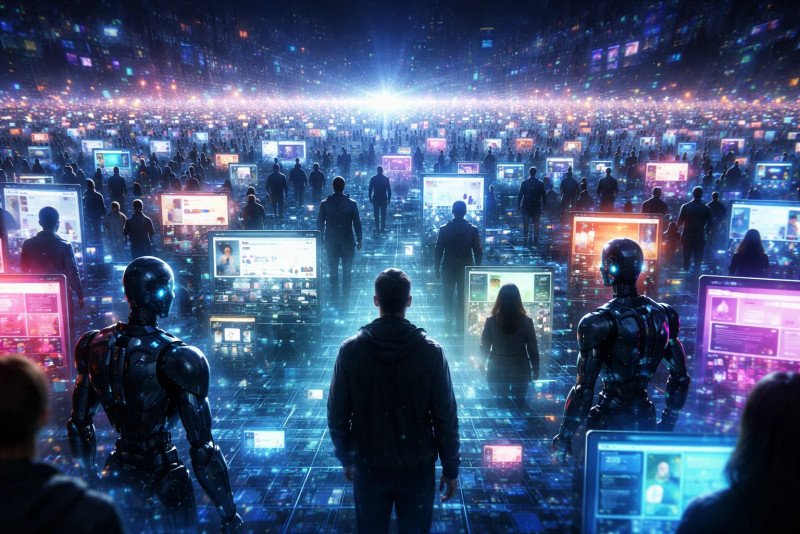
This strange, empty feeling is what fuels the Dead Internet Theory. At its core, the theory suggests that a large part of what we see online today is no longer created or driven by real people. Instead, it argues, bots, automated systems, and mass-produced content dominate the web, creating the illusion of activity without genuine human presence.
It sounds dramatic. It sounds paranoid. But parts of it are rooted in reality.

What Is the Dead Internet Theory?
The Dead Internet Theory claims that much of the internet is now made up of automated traffic, artificial engagement, and machine-generated content. According to the theory, this shift did not happen overnight. It crept in slowly, as platforms rewarded speed, volume, and clicks rather than originality or depth.
There are two main versions of the theory.
The first is a moderate version, which argues that bots, content farms, and automated systems now play a major role in shaping what people see online. This version is widely supported by traffic data, cybersecurity reports, and platform disclosures.
The second is an extreme version, which claims that most online activity is fake and controlled by hidden forces to influence public opinion. This version has no solid evidence and is best viewed as speculation rather than fact.
Understanding the difference between these two versions is crucial.
Where Did the Theory Come From?
The term gained traction around 2020 and 2021, during a period when online activity exploded and moderation systems struggled to keep up. People began noticing patterns: recycled comments, strange replies, accounts posting nonstop, and articles that felt written without care or insight.
Forums and social media users started sharing the same question: Where did the real people go?
Journalists soon picked up on the idea, not as proof of a conspiracy, but as a reflection of growing discomfort with how the internet was changing.

The Real Evidence Behind the Theory
Automated Traffic Is Massive
Security researchers have repeatedly reported that automated programs account for a large share of global internet traffic. These bots include search engine crawlers, data scrapers, marketing tools, and malicious scripts.
This does not mean half the internet is fake conversation, but it does mean machines are everywhere online.
Low-Quality Content Is Increasing
As content creation tools became cheaper and faster, many websites began publishing massive amounts of shallow material designed only to attract clicks or ad revenue. This flood of low-effort content has made it harder for original voices to stand out.
Platforms Are Struggling
Major platforms and search engines openly admit they are fighting spam, fake engagement, and artificial amplification. The struggle itself is proof that the problem exists.

Why the Internet Feels “Empty”
The internet feels less human not because people disappeared, but because algorithms decide what gets seen. Content that is fast, safe, and repeatable often performs better than thoughtful or nuanced work.
As a result:
-
Comment sections fill with generic replies
-
News feeds repeat the same ideas
-
Authentic discussion gets buried
This creates the illusion of a lifeless web, even though real people are still present.
What the Theory Gets Right — and What It Gets Wrong
What it gets right:
-
Bots influence traffic and engagement
-
Automation shapes visibility
-
Low-effort content is a real problem
What it gets wrong:
-
The idea that humans have been replaced
-
Claims of total control without evidence
-
The belief that nothing online is real anymore
The truth sits in the middle.
Why This Matters
A polluted internet affects everyone.
It lowers trust, spreads misinformation, and rewards noise over knowledge. It also affects future technologies, since systems trained on poor-quality data tend to produce poor results.
The Dead Internet Theory matters not because it predicts doom, but because it forces an important question: What kind of internet do we want?
How to Find Real Human Spaces Online
Despite everything, real people are still out there.
You’re more likely to find them in:
-
Smaller communities with clear rules
-
Long-term creators with consistent voices
-
Discussions that include personal detail and disagreement
Pay attention to how people respond, not how often they post.
Frequently Asked Questions
Is the Dead Internet Theory true?
Parts of it reflect real trends, such as automation and content flooding. The extreme conspiracy version is not supported by evidence.
Are bots controlling social media?
Bots influence engagement, but they do not fully control platforms. Human behavior, algorithms, and economic incentives all play roles.
Is AI ruining the internet?
AI is changing the internet. Whether that change is harmful depends on how platforms, creators, and users respond.
Can the internet recover?
Yes. Quality content still succeeds, especially when people actively support it.
Final Thoughts
The internet is not dead. But it is tired.
It is overloaded, automated, and shaped by incentives that often ignore human connection. The Dead Internet Theory survives because it captures a feeling many people share — the sense that something meaningful has been lost.
Whether that loss becomes permanent depends on what we choose to reward, share, and trust online.