.png)
.png)
.png)
.png)
The River That Flows Backward in India: A Mystery That Refuses to Die
For decades, stories have circulated about a river in India that flows backward, defying gravity and rewriting everything we think we know about nature. Travelers swear they’ve seen boats drifting upstream without effort. Locals tell tales passed down through generations. Social media has amplified the claim, turning it into one of the country’s most intriguing natural mysteries.
But does such a river really exist? Or is this another case where science hides behind a veil of illusion?
The answer is both less supernatural and far more fascinating than the myth suggests.

Where the Mystery Began
The idea of a backward-flowing river gained attention during colonial times, when British sailors navigating eastern India reported something unusual. At certain hours, rivers near the coast seemed to reverse direction, carrying ships inland instead of toward the sea.
Without modern understanding of tides and river dynamics, the phenomenon was logged as strange, unexplained, and unsettling. Over time, those observations turned into legend.
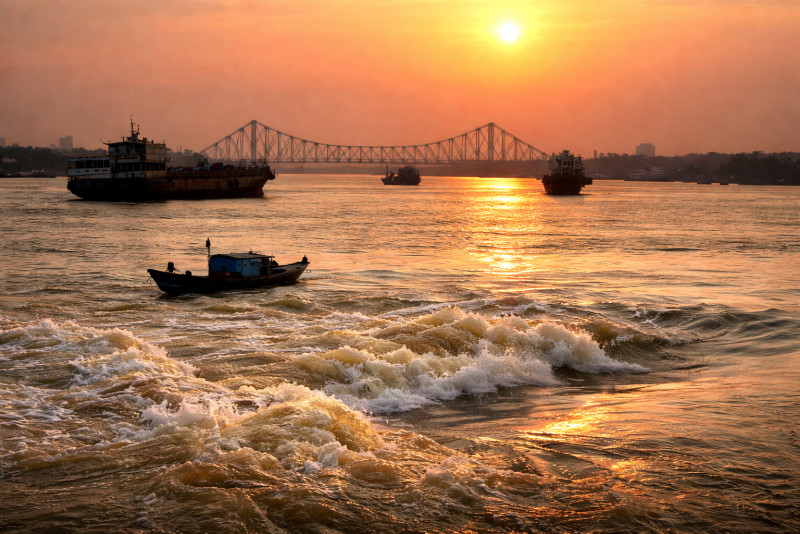
Today, the river most often linked to this mystery is the Hooghly River in West Bengal.
The Hooghly River: India’s “Backward” River?
The Hooghly is a major distributary of the Ganges and one of the most heavily navigated rivers in the region. It flows through Kolkata and plays a critical role in trade, history, and daily life.
What makes it unusual is this:
At certain times of the day, the river appears to flow in the opposite direction.
Boats slow down, water currents reverse, and the river seems to ignore gravity altogether.
To an untrained eye, it looks impossible.

The Hidden Force Behind the Illusion
The real reason behind this phenomenon is tidal reversal.
The Hooghly is strongly influenced by the Bay of Bengal. During high tide, massive volumes of seawater push inland with such force that they overpower the river’s natural downstream flow.
For several hours:
- Water moves upstream
- Currents reverse
- The river surface changes direction
This is not a permanent condition, but a temporary dominance of ocean tides over river discharge.
In simple terms, the sea briefly wins.

Why This Doesn’t Happen Everywhere
Not all rivers experience this effect. The Hooghly’s backward illusion occurs because of three unique conditions:
- Flat delta terrain – allows tidal water to travel far inland
- Strong tidal range – the Bay of Bengal produces powerful tides
- Wide river channel – reduces resistance against incoming seawater
Together, these factors create a dramatic but natural reversal.
Other Rivers That Add to the Confusion
The mystery doesn’t stop with the Hooghly.
In the Sundarbans delta, multiple river channels connected to the Brahmaputra and Ganges systems behave unpredictably. During strong tides, currents can shift direction rapidly, making navigation extremely dangerous.
Then there are rivers like the Narmada and Mahi, which flow from east to west — rare in the subcontinent. Many people mistake this unusual direction for “backward flow,” even though it follows normal geological rules.
Westward does not mean backward.

Why the Myth Refuses to Die
Despite scientific explanations, the backward river story continues to thrive. Here’s why:
- The reversal is visually dramatic
- It happens without warning to casual observers
- Ancient texts often spoke poetically about rivers “changing paths”
- Modern viral videos lack context
Mystery spreads faster than explanation.
And when science isn’t immediately visible, imagination fills the gap.
Does Any River Truly Flow Backward?
The answer is clear.
No river in India — or anywhere on Earth — permanently flows backward against gravity.
What people witness is:
- Temporary tidal reversal
- Optical illusion from changing currents
- Misinterpretation of geography
Nature follows physics, even when it looks like magic.
A Mystery Explained, Not Destroyed
Understanding the science doesn’t make the phenomenon less impressive. In fact, it makes it more remarkable.
A river so closely connected to the ocean that it can briefly surrender its direction reminds us how dynamic Earth really is. What looks like defiance is actually balance — a tug-of-war between river and sea.
The mystery wasn’t fake.
It was just misunderstood.