.png)
.png)
.png)
.png)
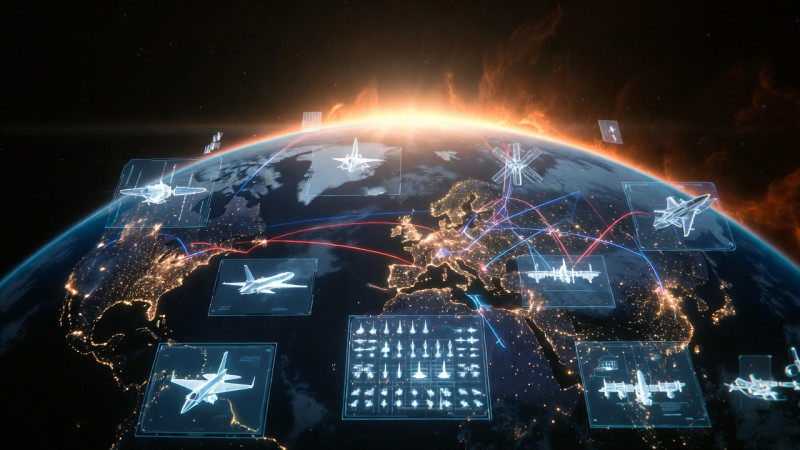
What If World War III Breaks Out in 2026 — Which Countries Would Be Involved?
Imagine this: it’s March 15, 2026 at 04:00 GMT, and shockwaves ripple through global markets as satellite networks pick up unusual troop mobilizations on multiple continents. Analysts warn the world has crossed thresholds once thought impossible. Could a full-blown World War III really erupt in 2026? Which nations would be dragged into such a terrible conflict — and what could ignite it?
While this remains a theoretical scenario, today’s geopolitical landscape is rugged with tensions that could cascade into a broader war. Experts now spotlight several regions and powers where simmering disputes could bleed into something far larger.

The Main Flashpoints of a 2026 Escalation
United States vs China — Taiwan and Indo-Pacific Theatre
One of the most widely discussed tension points is the standoff over Taiwan. Beijing’s military drills and increased pressure on Taipei have alarmed policymakers in Washington and Tokyo. These movements aren’t isolated. They come amid a broader rivalry for economic and military dominance in East Asia.
Should China attempt to force reunification with Taiwan, the situation could draw in the United States, Japan, Australia, and other regional allies. Many analysts believe that even a limited conflict over Taiwan could rapidly expand due to treaty obligations and strategic interests.
Russia and NATO — Europe on Edge
The long war between Russia and Ukraine has eroded stability in Eastern Europe. Long before 2026, Moscow’s aims to secure influence over former Soviet states has placed it directly at odds with NATO members. Europe’s defensive posture has hardened, with secret contingency plans and deployment strategies aimed at deterring Russian advances.
If a miscalculation or rapid escalation occurs — such as an inadvertent strike on a NATO member — Article 5 obligations could activate full alliance involvement, dragging countries like the U.K., France, and Poland into conflict.

Middle East — Proxy Wars and Regional Alliances
In recent years, the Middle East has been a volatile nexus of rivalries. In June 2025, high-intensity clashes involving Iran, Israel, and allied forces escalated when multiple nuclear sites and military installations were targeted. While that conflict remained regional, it underscored how quickly proxy battles can expand.
Iran’s alliances with groups in Yemen, Lebanon, and Iraq mean that any open confrontation with Israel or the U.S. risks pulling in Saudi Arabia, Turkey, or other Middle Eastern powers.
Emerging Coalitions and Strategic Alignments
Global power blocs are shifting. Joint naval exercises between China, Russia, and Iran signal a tightening of strategic cooperation among these nations, already under pressure from U.S. sanctions and diplomatic isolation.
Meanwhile, fracturing alliances in other regions — such as NATO or ASEAN — could lead states to balance choices based on national survival rather than collective security.

Why Would It Explode in 2026?
Analysts suggest that a convergence of political agendas, military planning, and national ambitions has made 2026 a potential flashpoint. A recent expert survey flagged several major disputes — from trade wars and technological races to contested territories — that could tip into kinetic fighting under stress.
Political motives are key. Hardening national postures in the U.S., China, Russia, and Iran mean diplomatic flexibility shrinks over time. If leaders feel cornered or under domestic pressure to act decisively, risk tolerance increases dramatically.
Another factor is strategic miscalculation — when military actions intended to signal strength spiral into real combat due to misunderstanding or delayed communications. Modern warfare moves in milliseconds. Today’s battlespace — rich in satellites, drones, and autonomous tech — leaves little room for slow deliberation.
Likely Groupings in a 2026 Conflict
If World War III broke out, these broad alignments are plausible based on current alliances and tensions:
Potential Coalition A
- United States
- NATO members (UK, France, Germany, etc.)
- Japan, South Korea
- Other Pacific allies
Potential Coalition B
- China
- Russia
- Iran
- Possibly North Korea and other aligned states
These groupings imagine not just a single battlefield but multiple theatres — Europe, Indo-Pacific, and the Middle East — all erupting concurrently due to interconnected interests.

Civilian Impact and Global Consequences
Should global conflict unfold, the effects would extend far beyond battlefields. Global supply chains would be disrupted, energy prices would surge, and millions of civilians could suffer displacement. Economic turmoil could rival the Great Depression, and the specter of nuclear involvement, while uncertain, would cast a long shadow over every negotiation.
Conclusion — Tipping Point or Overblown Fear?
World War III in 2026 is not a certainty, but it is increasingly viewed by experts as within the realm of possibility due to overlapping tensions and weak international safety nets. Whether through a crisis in the Taiwan Strait, a snap escalation in Eastern Europe, or a sudden Middle East conflagration, the world’s interconnected nature means one clash could spark many.
Understanding the why and where of these risks is critical — not to fuel fear, but to mobilize diplomacy before the tinder ignites.
Reference Links and Sources:
Council on Foreign Relations – Conflicts to Watch in 2026
https://www.cfr.org/report/conflicts-watch-2026
Reuters – China, Russia and Iran begin joint naval exercises (Jan 10, 2026)
https://www.reuters.com/world/china/china-russia-iran-start-brics-plus-naval-exercises-south-african-waters-2026-01-10/
Reuters – China’s large-scale military drills around Taiwan (Dec 30, 2025)