.png)
.png)
.png)
.png)
By Ronald Kapper
For years, the idea that UFOs deserved serious scientific attention was treated as fringe thinking. That changed quietly—but decisively—when NASA released the findings of its independent study into Unidentified Aerial Phenomena (UAP).
NASA did not confirm aliens.
NASA did not claim advanced visitors from another world.
What it did admit is, in many ways, more unsettling: some UFO encounters cannot be explained with the data currently available—and the agency says that lack of answers is a serious problem.
What NASA Actually Said (And What It Didn’t)
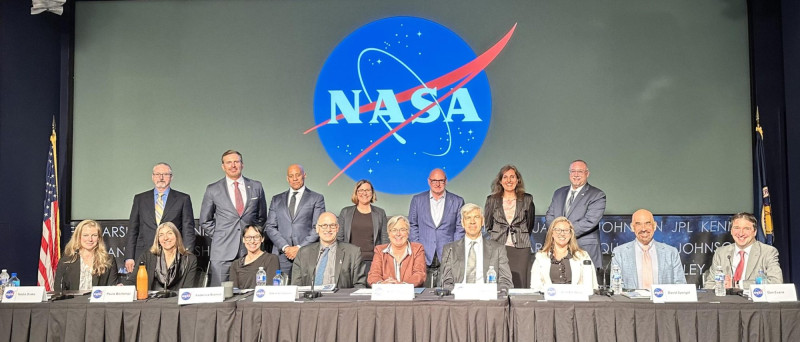
NASA’s UAP study, conducted by an independent panel of scientists and experts, reviewed dozens of encounters reported by military pilots, satellites, and ground-based sensors. These cases overlapped with data also analyzed by the U.S. defense community.
The conclusion was careful but striking.
NASA stated that:
- A portion of UAP sightings remain unidentified
- Existing data is insufficient for firm conclusions
- There is no evidence these objects are extraterrestrial
- The current monitoring systems were not designed to study UAP
That final point is critical. NASA isn’t saying the phenomena are impossible to explain—it’s saying science doesn’t yet have the right tools to explain them.
Why the “Unknowns” Matter More Than the Answers
In science, uncertainty isn’t failure. It’s a signal.
NASA researchers emphasized that many UAP reports suffer from:
- Incomplete sensor coverage
- Low-resolution imagery
- Short encounter durations
- Lack of standardized reporting
In other words, the mystery may not lie in the sky—but in the data itself.
Still, several cases stood out because they involved trained observers using advanced instruments, yet produced results that didn’t match known aircraft, drones, atmospheric effects, or space debris.
When scientists encounter repeatable anomalies without enough information to classify them, it raises a red flag—not about aliens, but about gaps in observation.
The Role of Military Data
Many of the encounters reviewed by NASA originated from U.S. Navy and Air Force pilots operating in restricted airspace. These pilots weren’t looking for UFOs. They were flying routine missions when something unusual appeared on sensors—or directly in front of them.
NASA acknowledged that much of the most valuable data remains classified, limiting what civilian scientists can analyze.
This creates a paradox:
- The best data exists
- But it cannot be fully shared
- Which slows scientific understanding
NASA has openly called for better cooperation between civilian science agencies and the defense sector to resolve this bottleneck.
Why NASA Avoids the Word “UFO”
Like the Pentagon, NASA uses the term UAP to distance the discussion from pop culture and speculation. The goal is to normalize the study of unexplained phenomena without ridicule.
NASA officials stressed that stigma has historically discouraged reporting, leading to fewer data points and weaker conclusions.
In short, mockery has been bad for science.
A Technology Problem, Not a Belief Problem
One of the most overlooked points in NASA’s findings is this: most existing sensors were built for other purposes.
Satellites track weather, climate, and space debris—not fast-moving, unpredictable objects in Earth’s atmosphere. Aircraft sensors prioritize navigation and threats, not scientific measurement.
NASA argues that resolving UAP mysteries will require:
- Dedicated sensors
- Better AI-driven data analysis
- Cross-agency data sharing
- Consistent global reporting standards
Without these, even advanced science hits a wall.
Why This Is a “Problem,” According to NASA
NASA officials were clear: unexplained objects in controlled airspace are not just curiosities. They are knowledge gaps that affect:
- Aviation safety
- National security
- Scientific credibility
When something can’t be identified, it can’t be predicted—and that makes risk assessment difficult.
This is why NASA sees the issue as operational and scientific, not sensational.
What Happens Next?
NASA plans to play a coordinating role rather than a lead investigative one. The agency will support data analysis, improve transparency, and help design better observation systems.
Meanwhile, the Pentagon’s dedicated UAP office continues its own investigations, with Congress demanding regular public updates.
The mystery isn’t closing. It’s becoming more structured.
References :
NASA commissioned an independent study team to examine UAP scientifically. NASA Science
The final NASA report said existing data is insufficient to conclusively explain many UAP sightings. Wikipedia
NASA did not find evidence of extraterrestrial origins in its study — and highlighted data limitations. Wikipedia
NASA emphasizes the need for better sensors and methods, as the current data quality prevents strong conclusions. Rev
Congressional and Pentagon efforts also acknowledge that many sightings remain unresolved. https://oversight.house.gov/hearing/unidentified-anomalous-phenomena-exposing-the-truth/?utm_source=chatgpt.com